

There’s something incredibly comforting and nostalgic about a classic oatmeal and raisin cookie. It’s a bake that feels wholesome yet utterly indulgent, offering a delightful chewiness, warm spices, and the sweet burst of plump raisins in every bite. While often overshadowed by its chocolate chip cousin, a well-made oatmeal and raisin cookie holds its own as a truly satisfying treat. I can honestly say that this is one of my favourite cookies!
My recipe for Super Chewy Oatmeal & Raisin Cookies is designed to deliver that perfect texture – soft and yielding in the middle, with just the right amount of chewiness and a hint of crispness at the edges. We’ll explore how the oats contribute to this unique texture and how a blend of spices elevates the humble raisin to something truly special.
In this post, I’ll guide you through every step to create these wonderfully comforting cookies. Get ready to fill your kitchen with the inviting aroma of cinnamon and oats, and bake a batch of cookies that are perfect with a cosy afternoon cuppa or a as a lunchbox treat!
Ingredients
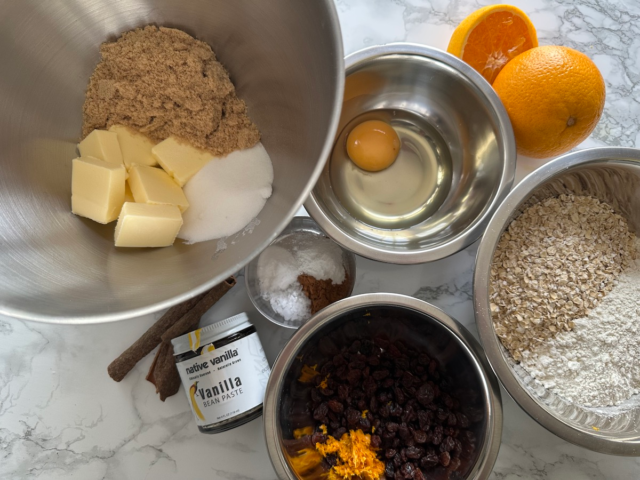
- Unsalted Butter – Forms the rich foundation of these cookies, allowing precise control over the overall seasoning. When creamed, its solid fats effectively aerate the mixture, contributing to a wonderfully tender yet satisfyingly chewy crumb. As it melts during baking, butter also helps develop those desirable crisp edges and promotes a beautiful golden-brown finish.
- Light Brown Sugar – Is pivotal for both the texture and the deep, sweet flavour of these cookies. Its natural molasses content imparts a subtle caramel note and, crucially, adds moisture that ensures the cookies remain delightfully soft and chewy over time. This moisture, along with its mild acidity, also plays a role in the cookie’s spread and browning during baking.
- Caster Sugar – Caster sugar (superfine granulated sugar) works in tandem with the brown sugar to achieve the perfect balance of sweetness and texture. Its fine crystals dissolve readily, contributing to a slightly crisper exterior and helping the cookies achieve an even spread on the baking tray.
- Whole Egg – The whole egg acts as a vital emulsifier and binder in this recipe, bringing all the ingredients together into a cohesive dough. The yolk enriches the flavour and adds tenderness, while the white contributes to the cookie’s structure and helps create that signature chewy texture.
- Plain Flour (All-purpose) – For these oatmeal cookies, a plain flour with a slightly higher protein content (around 10-12%) is beneficial. This protein provides the necessary structure to ensure the cookies hold their shape well, preventing them from becoming too fragile. While some bakers might use stronger flours, I find this protein level offers the ideal balance for a satisfying bite. Check out my ‘The Secret Life of Flour’ post to understand more about gluten!
- Rolled Oats – Rolled oats in your cookie recipe will contribute significantly to both texture and flavour.
- Baking Powder – Baking powder is a fast-acting leavener, containing its own acid (typically cream of tartar). It reacts quickly under heat, producing carbon dioxide that gives the cookies a gentle lift. This is particularly important for these cookies, as it helps prevent them from spreading too thinly, especially given the lower gluten content compared to some other cookie types.
- Bicarbonate of Soda – Bicarbonate of soda (bicarb) is essential for the characteristic spread and chewiness of these cookies. It reacts with the mild acids found in ingredients like light brown sugar, releasing carbon dioxide with a slight delay. This allows the cookies to spread out nicely before setting, contributing to their soft, chewy centre and subtly crisp edges. Bicarb also aids in the Maillard reaction, promoting a lovely golden-brown colour during the bake.
- Sea Salt – Sea salt is crucial for enhancing and balancing the overall flavour profile of the cookies. It sharpens the sweetness, deepens the notes of the spices and oats, and prevents the cookies from tasting overly saccharine, bringing out the best in every ingredient.
- Ground Cinnamon – Ground cinnamon infuses these cookies with a comforting warmth and aromatic spice. Its sweet and woody notes are a classic pairing with both oats and raisins, elevating the overall flavour and creating that inviting, nostalgic aroma.
- Orange Zest – Orange zest provides a bright, fragrant lift to the cookies. Its vibrant citrus oils add a subtle tang and a beautiful aroma that complements the warmth of the cinnamon and the sweetness of the raisins, adding an extra layer of complexity.
- Raisins – Raisins are the quintessential chewy addition to these cookies, offering bursts of concentrated sweetness and a delightful, plump texture. They soften beautifully during baking, providing a juicy contrast to the oats and enhancing the cookie’s comforting appeal.
- Vanilla Paste – Vanilla paste delivers a rich, complex vanilla flavour that is more pronounced and nuanced than extract, often with visible specks of vanilla bean for an authentic touch. It rounds out the cookie’s flavour profile, adding a comforting depth.
All the equipment you need
- Stand Mixer or Electric Whisk
- Greaseproof Paper (Parchment)
- Baking Trays
- 10cm Cookie Cutter
- Mixing Bowl
- Digital scale
- Fine Mesh Sieve
- Wire Cooling Rack
- Microplane or Zester
Storing the Perfectly Spiced Oatmeal Raisin Cookies
Baked cookies will last up to 2 days in an airtight container at ambient.
Keep the raw dough wrapped in cling film in the freezer for up to 3 months, cut and bake as you need, perfect for preparing well in advance.
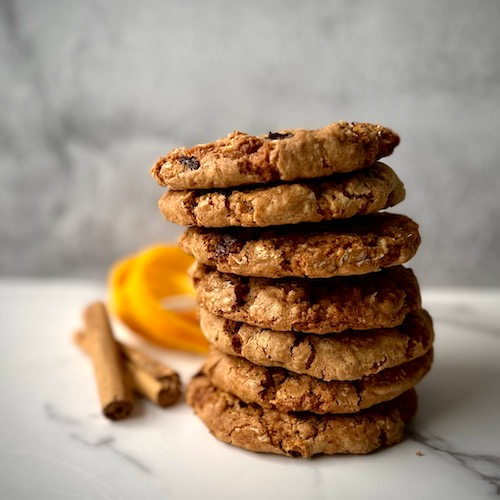
Perfectly Spiced Oatmeal Raisin Cookies
Ingredients
Equipment
Method
- Into a mixing bowl sift flour, baking powder and baking soda to remove lumps.
- Zest the orange and set aside for the moment.
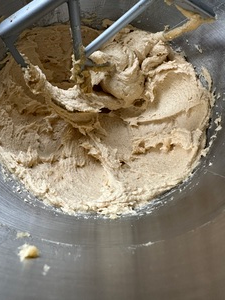
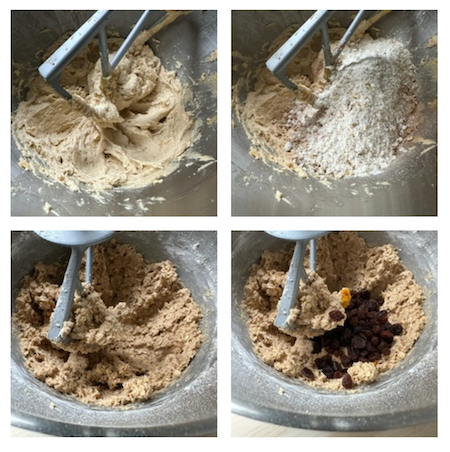
- Into a stand mixer bowl add softened butter, light brown sugar, caster sugar and vanilla paste. Cream together on a medium-high speed scraping down every so often until light pale and fluffy.

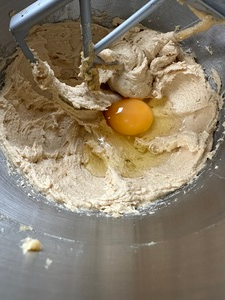
- Scrape down the bowl and add in the egg, mix on a medium speed until the egg has completely incorporated.
- Scrape down the bowl, add sifted flour, baking powder, baking soda, cinnamon and salt in ⅓ increments on a low speed until all combined. Add in the orange zest and raisin. Mix on low till evenly dispersed, about 30 seconds.

- Turn out dough onto a lightly floured worktop and roll into a log 30cm (12 inches) wide. Wrap in cling film, place onto a tray and into the freezer for an hour to set firm.1
- Preheat the oven to 160℃ (320℉). Line baking trays with greaseproof paper (parchment).
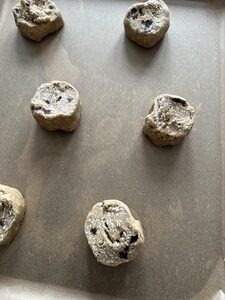
- Remove the log from the fridge and cut 2cm (¾ inch) wide disks, space out on to the baking trays (they will spread slightly) and into the oven for 13-16 minutes. Bake until there is a light golden brown colour.2
- Remove from the oven and quickly reshape the cookies with a cookie cutter and let cookies cool in the tray for 30 minutes or so before handling.
Notes
- To form a tight, smooth log: Place a 30x40cm piece of greaseproof paper vertically on your work surface. Position the pre-rolled dough log one-third of the way from the top. Fold the bottom two-thirds of the paper over the dough. Using a metal ruler or firm, flat edge, tuck it into the base of the shortbread log and push towards you, forcing the dough to roll tightly within the paper. Repeat this rolling motion a few times until a firm, smooth log is achieved. Keep wrapped in paper and freeze until firm.
- 2 cm wide disks will give you a 50g cookie. This is why I like to roll into a log because I can cut different thicknesses for the weight of cookie I want. Also it makes for easier storage when freezing and I don't have to use the entire log, just cut what I need and bake. If you are pressed for time roll into balls of your desired weight and place in a single layer onto a tray and into the freezer for 30 minutes and then bake. Cooking time will vary based on size and weight of the dough.
- This risk of over-mixing the dough here is low, at least in terms of gluten development. You still only want to mix the dough until it all comes together but since the flour quantity is lower than other recipes slightly developing the gluten won't effect the cookies in as much.