
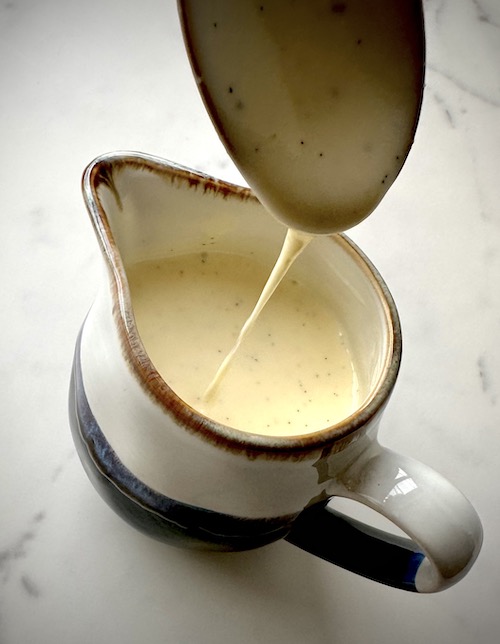
Master the classic French custard sauce, Crème Anglaise. This velvety smooth, rich, and versatile sauce is the perfect accompaniment to countless desserts, adding a touch of elegance to any plate.
In my opinion this is the superior custard, whenever I want a pouring custard I always make crème anglaise. I think for most people there is a nostalgic feeling when using the classic custard powder, for me i’ve never been a fan of it. It’s cheap, yes but it is literally a thickened yellow cornflour with a mild vanilla flavour. Honestly once you make crème anglaise I think you will also find it hard to go back to custard powder. Custard powder has it place but when you’ve worked effortlessly on a dessert whether it be a delicate vanilla cake, sweet flake pie or a buttery & creamy bread pudding, you don’t want to ruin the dessert with a basic powdered custard. But hey! I’ll let you be the judge of that! Give it a try and let me know down below.
How and where to use Crème Angliase!
- Use it as a pouring custard, over cakes, pies & fruit tarts
- Pair it with bread and butter pudding, crumbles or fresh fruit
- Crème anglaise is used as a base for ice creams
- Even on it own. I’m not joking when I say, at my previous job i’ve literally seen people take a bowl of crème anglaise to eat on its own.
Ingredients
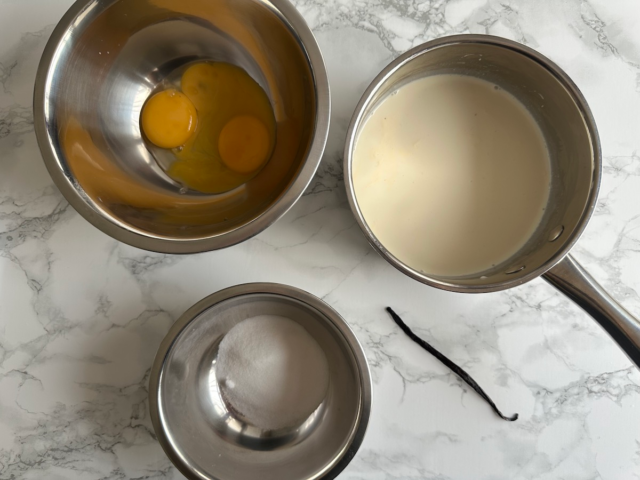
- Whipping Cream – You want a cream that is around 35% Fat, in the UK and other parts of the world we commonly have double cream. Double cream can be used but the high fat content will give the anglaise a thicker consistency. Anglaise is traditionally a runny custard but thick enough so it’s not a complete puddle on a plate. You can you double cream, I would just use a little less and make up the difference with whole milk to help reduce the fat percentage
- Whole Milk
- Egg Yolks – We use egg yolks for it rich fattiness. There is enough fat to help thicken the custard to give it some body, and at the same time the fat adds a richness in flavour. Also it help in give the custard a little colour
- Caster Sugar
- Vanilla Pods – I know this is an expensive option but in my opinion, nothing beats the flavour of a fresh vanilla pod especially when added to fresh creams and custards. A little goes a long way as long when you have good quality vanilla pods. As a substitute, vanilla paste will work just fine if you don’t want to use pods.
All the equipment you need to make Crème Anglaise
- Heavy Bottom Saucepan
- Mixing Bowl
- Digital scale
- Temperature Probe
- Fine Mesh Sieve
How to store Crème Anglaise
Crème anglaise will store for up to 4 days in the fridge. This can be made in advance, once you are ready to use gently heat in a heavy bottom saucepan over low-medium heat continuously stirring until you reach 64oC.
Anglaise will freeze fine but it doesn’t thaw out well, I would not recommend freezing.
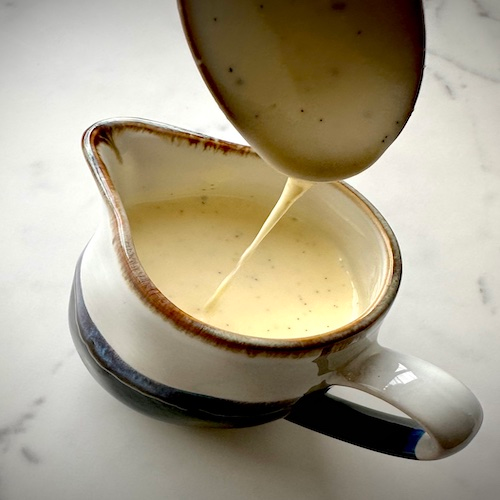
Crème Anglaise (English Custard)
Ingredients
Equipment
Method
- Add Milk, Cream and Vanilla to the saucepan and place on a hob over medium heat and bring to a simmer

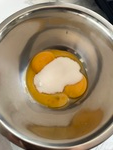
- Meanwhile, add sugar and egg yolks to a bowl and with a spatula incorporate until you get a pale yellow paste (about 15 seconds)1
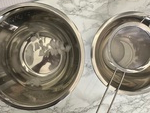
- Get an 2 mixing bowls, one smaller than the other. In the large bowl add water and ice2

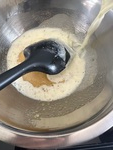
- Once the liquid has come to a simmer, temper the egg yolks by pouring liquid a little at a time, stirring continuously until about half the liquid has been incorporated.3
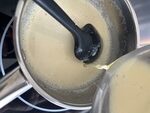
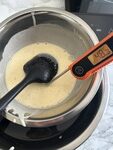
- Pour the tempered egg yolk mixture back into the pan with the remaining liquid on a low/medium heat. Keep stirring, scraping the bottom and the sides of the pan until the mix has reached 83℃ (181℉)4
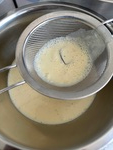
- Strain the anglaise through an fine mesh sieve into the smaller bowl
- Place the bowl in to the ice bath and mix slowly with a spatula until the custard has dropped to 50℃5
- Place into a container surface wrapped with cling film and place into the fridge
Notes
- When mixing egg yolks and sugar you only want to combine it together. Do not mix vigorously, you don't want to incorporate any air.
- You only need to set up an ice bath to cool the custard if you are making it in advance. If you plan to serve straight away then simply strain the custard once it has come to the right temperature and serve in a jug or over the dessert.
- You don't want to boil the liquid. When it comes to tempering the yolks pouring boiling liquid over room temperature yolks will cause the temperature to rise quickly and scramble the eggs.
- You want to keep the custard moving otherwise you'll end up with scrambled egg through your mix and the custard will take on an eggy flavour.
- The anglaise is cooled to ensure the custard doesn't continue to cook through residual heat when in a container.
- You can use double cream as a substitute for whipping cream in this recipe, you may end up with a slightly thicker custard as a result. If you only have double cream or a fattier cream than whipping cream use a little less and make up the difference with whole milk to achieve the correct fluidity for the crème anglaise