
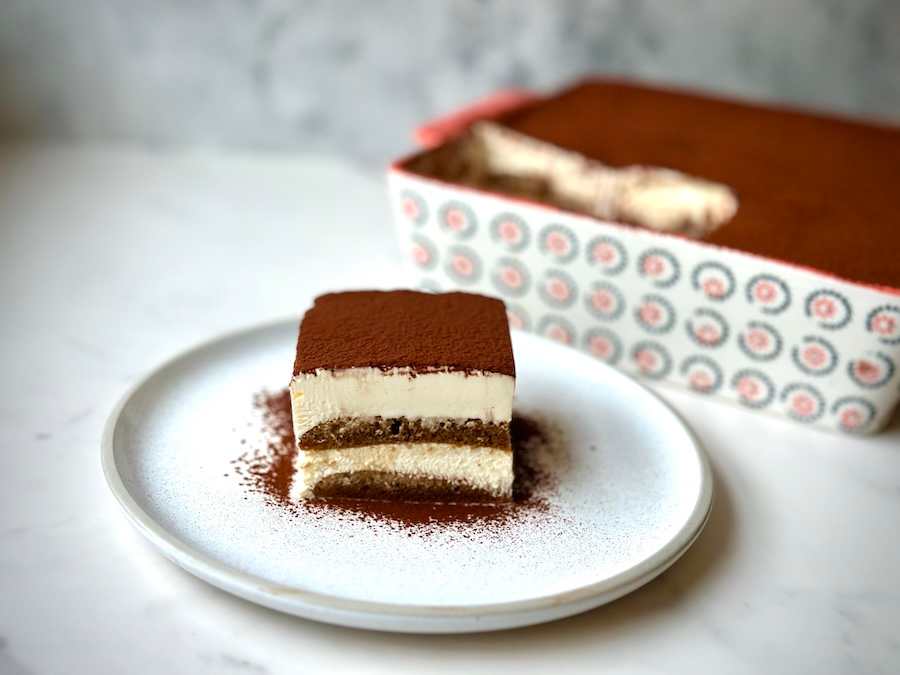
Experience the ultimate elevation of Italy’s most iconic dessert through a lens of professional pastry technique. This Tiramisu is built upon a foundation of homemade Savoiardi biscuits, engineered for a light, porous crumb that expertly holds a high-intensity espresso soak.
The hallmark of this version is the Pâte à Bomb, a technique where a precision-tempered sugar syrup is whisked into egg yolks to create a dense, stable, and incredibly rich and velvety base. When folded with premium mascarpone and aerated cream, it results in a filling with unparalleled structural integrity and a rich, custard-like depth. Meticulously layered and finished with a veil of cocoa, this is a sophisticated entremet designed for those who value technical precision and a flawless, melt-in-the-mouth texture.
Ingredients
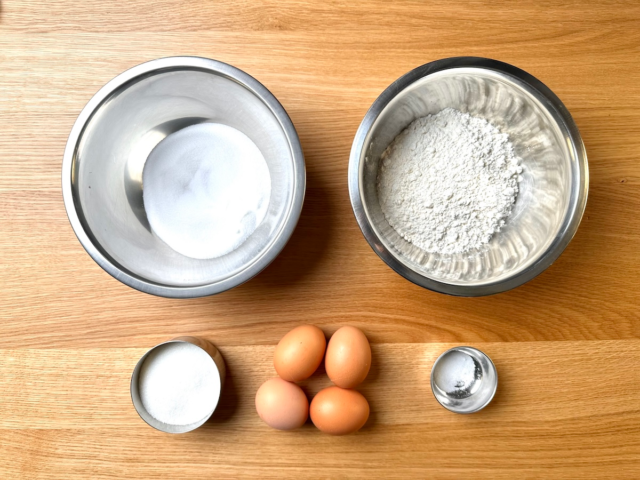
Savoiardi Biscuits
-
Egg White – The primary aerator; whipped into a stable meringue to provide the lift and “sponge” structure necessary for a light biscuit.
-
Egg Yolk – Provides lipids and lecithin for a rich mouthfeel and binds the batter while contributing to the classic golden hue.
-
Caster Sugar – Chosen for its fine crystals that dissolve rapidly into the meringue, ensuring a stable, glossy foam and a crisp, pearl-like crust.
-
Plain Flour (9-11% Protein) – A medium-protein flour that provides enough gluten for structural integrity without making the biscuits tough or bready.
-
Salt – A critical flavour enhancer that sharpens the sweetness and balances the richness of the egg yolks.
-
Vanilla Paste – Adds deep, aromatic floral notes and visual “specks” of quality that distinguish homemade biscuits from commercial alternatives.
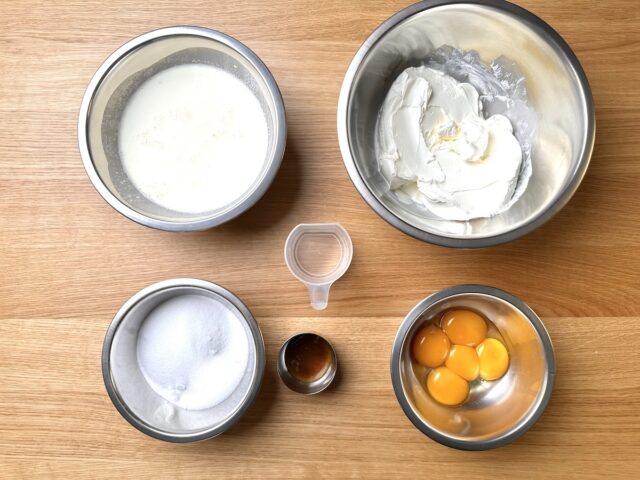
Mascarpone Cream
-
Egg Yolk – The foundation of the Pâte à Bombe; when cooked with sugar syrup, it creates a safe, aerated, and velvety base for the cream.
-
Caster Sugar – Combined with water to create a 121°C (250°F) syrup, it pasteurises the yolks and provides the essential sweetness.
-
Water – Used as the vehicle for the sugar syrup to ensure even melting and to reach the precise “soft ball” stage.
-
Mascarpone Cheese – A thick, double-cream Italian cheese that provides the signature dense, buttery richness and subtle tang.
-
Whipping Cream (35-40% Fat) – High-fat cream provides the necessary stability when whipped; it is folded in to lighten the dense mascarpone into a mousse-like texture.
-
Vanilla Paste – Infuses the cream with a sophisticated fragrance that cuts through the heavy fat content of the cheese.
Coffee Soak
-
Instant Espresso Powder – A concentrated coffee source that delivers a punchy, bold roast profile without the excess water of standard brewed coffee.
-
Water (90°C) – Precisely heated to extract maximum flavour and caffeine while avoiding the release of bitter, acrid tannins found at boiling point.
All The Equipment You Need
Storing Tiramisu
1. The Maturation Window (The “Sweet Spot”)
While it is tempting to serve it after 4 hours, Tiramisu is technically at its peak between 12 and 24 hours after assembly. This period allows the espresso to migrate from the biscuits into the cream, creating a homogenous flavour profile and a “sliceable” stability.
2. Refrigeration Protocol
-
Temperature: Store at 4°C or below in the coldest part of the fridge.
-
Odour Protection: Mascarpone is highly absorbent. Always store in an airtight container or tightly double-wrapped with cling film to prevent the cream from taking on “fridge flavours” like onion or cheese.
-
Shelf Life: Due to the cooked egg yolks (Pâte à Bombe) and stabilised cream, it will keep safely for up to 3 days. Beyond this, the Savoiardi may become overly “weepy.”
3. The Cocoa Powder Rule
Never rely on the initial dusting for service. The cocoa powder applied before refrigerating will absorb moisture and turn into a dark, bitter “syrup” (hydroscopic effect). Always apply a fresh, secondary dusting of high-quality Dutch-processed cocoa immediately before plating to ensure a matte, velvety appearance.
4. Can You Freeze It?
Yes, but with a caveat. Because of the high fat content in the mascarpone and 35-40% cream, it freezes well for up to 2 weeks.
-
To Thaw: Move it to the fridge for 24 hours to defrost slowly. Never defrost at room temperature, or the emulsion may split, resulting in a grainy texture.
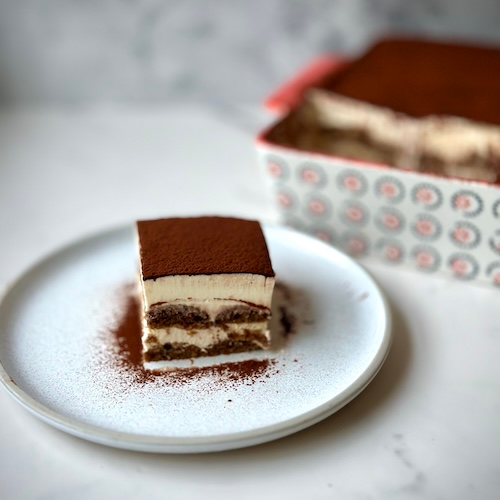
Rich and Velvety Tiramisu with Homemade Savoiardi Biscuits
Ingredients
Equipment
Method
- Dissolve the espresso powder in 90°C water. Leave the mixture to brew and cool completely to room temperature.
- Pre-heat the oven to 180℃ (356℉). Line 2 baking trays with silicone mats.
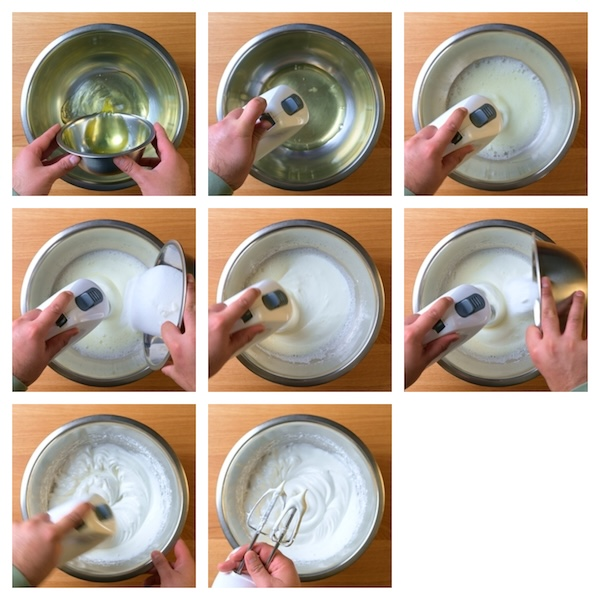
- Begin by whisking the egg whites on medium speed until they form a light foam. Gradually incorporate the sugar in three stages, whisking for 30 seconds between each addition to ensure the crystals are fully dissolved. Once all the sugar is integrated, increase the speed to high and continue whisking until the meringue reaches medium-stiff peaks, it should be glossy, stable, and hold its shape with a slight curl at the tip.

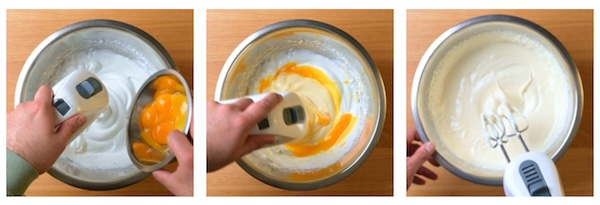
- Gently add the egg yolks to the meringue and whisk on a medium-low speed. Continue until the yolks are fully emulsified and the mixture significantly thickens, achieving a pale, voluminous, and ribbon-like consistency.

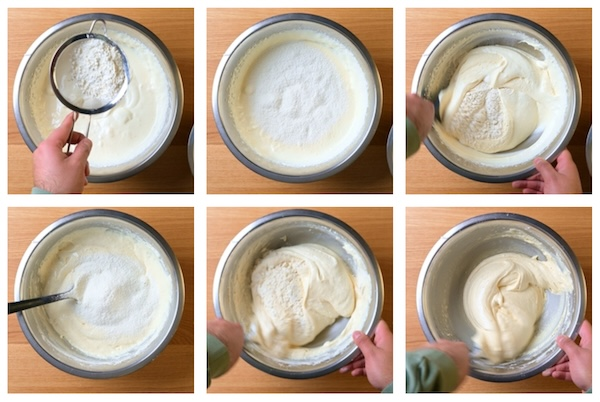
- Sift one-third of the dry ingredients over the egg mixture. Using a large silicone spatula, gently fold the flour in using a figure-of-eight motion, ensuring you reach the bottom of the bowl to prevent flour pockets. Repeat this process in two further stages until the mixture is just combined. Careful handling here is paramount to preserve the delicate air cells and ensure a light, porous biscuit.

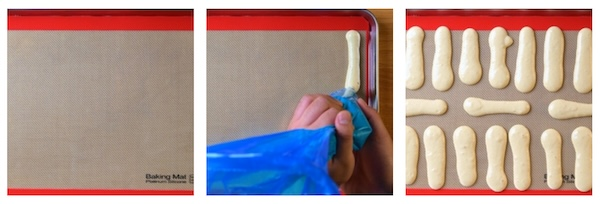
- Transfer the batter into a piping bag fitted with a 10mm plain round nozzle. On lined baking trays, pipe uniform lengths of approximately 7cm, leaving at least 2cm of space between each to allow for a slight expansion. For a professional finish, maintain steady pressure and terminate each biscuit with a quick "flick" of the wrist to ensure clean, rounded ends.

- Generously dust the piped batter with granulated sugar. For an authentic, crisp exterior, allow the sugar to sit for a minute before applying a second light dusting. Bake for 10–12 minutes until pale golden and firm to the touch. Once baked, turn off the heat and leave the Savoiardi in the oven with the door slightly ajar for 15 minutes. Finally, remove and allow to cool completely at room temperature.
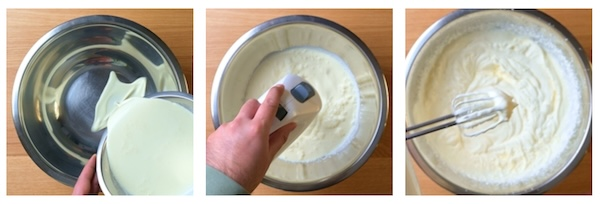
- In a clean, chilled bowl whisk whipping cream until medium peaks. Set the bowl, in the fridge.
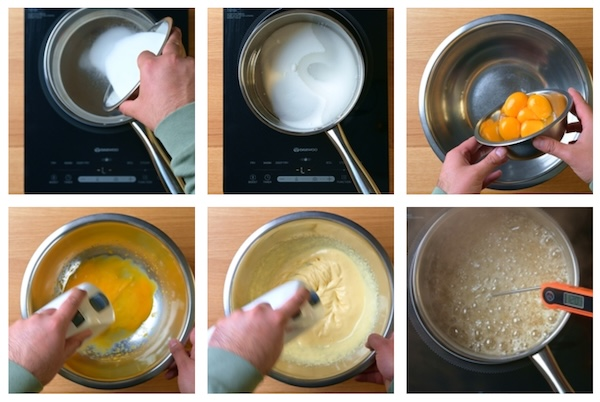
- Start by making a Pâte à Bombe. Combine the sugar and water in a saucepan over low heat, stirring gently until the crystals have fully dissolved. Simultaneously, begin whisking the egg yolks on medium-high speed for 5–8 minutes until they are thick, voluminous, and pale. Once the yolks have reached the "ribbon stage," increase the heat of the syrup, bringing it to exactly 121°C.
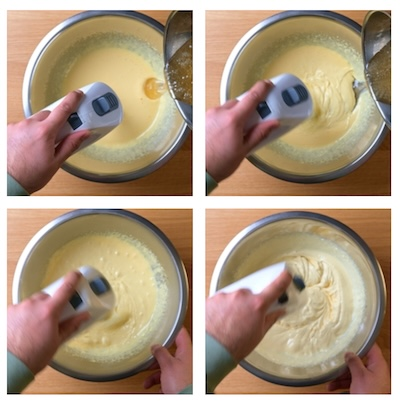
- With the mixer on a low setting, slowly drizzle the sugar syrup in a thin, steady stream down the internal side of the bowl. Once the syrup is fully incorporated, increase the speed to high and continue whisking until the mixture is thick and glossy (3-5 minutes).

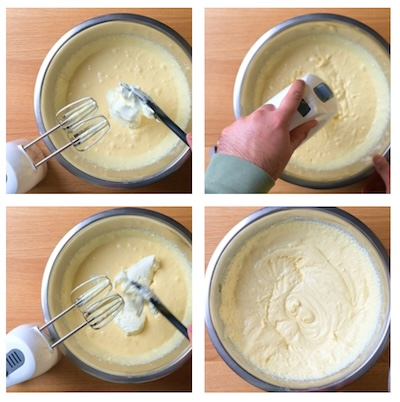
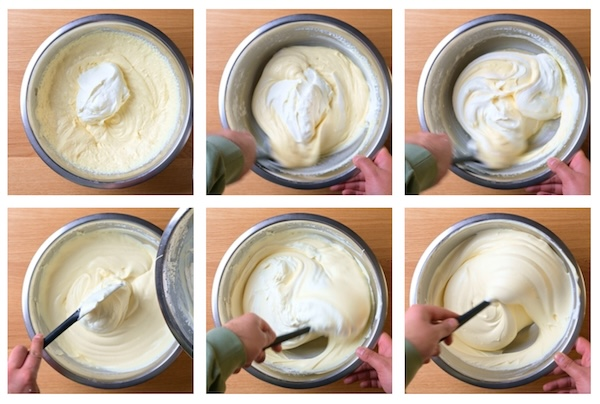
- Reduce the mixer to a low speed and introduce the mascarpone one large spoonful at a time. It is essential to whisk only until just combined after each addition. By adding the cheese gradually, you ensure the fat emulsifies perfectly with the Pâte à Bombe without the risk of the mixture splitting or becoming grainy. Stop as soon as the cream is smooth and holds a soft, uniform structure.

- Remove the semi-whipped cream from the fridge; if it has settled, give it a brief, gentle whisk by hand to restore its supple volume. Incorporate the cream into the Pâte à Bombe in three stages. Use the first third to "loosen" the dense mascarpone base, then delicately fold in the remaining two-thirds using a silicone spatula.

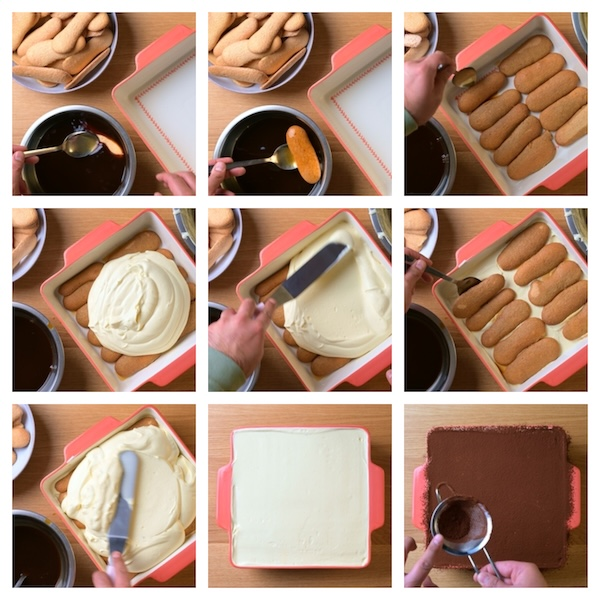
- To assemble, perform a rapid "flash-dip" of the homemade Savoiardi into the room-temperature espresso soak ensure they are saturated but maintain their structural core. Arrange a tight layer in your dish, then evenly distribute half of the mascarpone cream.
- Repeat the process for the second tier. Use a palette knife to create a flawless, level surface, then apply an initial light dusting of cocoa powder. Refrigerate for a minimum of 4 hours, though an overnight rest is preferred to allow the flavours to mature and the structure to stabilise. For a professional aesthetic, apply a final, fresh veil of cocoa powder immediately before serving.
Notes
- Using 90°C water prevents the coffee from scalding, which avoids the over-extraction of harsh tannins and bitter oils. This ensures a clean, punchy espresso profile that cuts through the mascarpone without an acrid or "burnt" aftertaste.
- While a medium roast instant espresso or Nescafé Gold yields excellent results, if you opt for an espresso, brew approximately 150ml and dilute in 350g of water. Regardless of the brand, always strain the liquid once steeped to remove any undissolved sediment, ensuring the soak remains clean and grit-free.
- Remove the sugar syrup from the heat at 120°C (248°F), as residual heat in the saucepan will cause the temperature to carry over to 121°C (250°F). This ensures you hit the perfect "soft ball" stage for the Pâte à Bombe without overshooting and risking a hard, candy-like texture.
- Whisking on low speed prevents the syrup from being flung against the bowl, which avoids the formation of hard sugar "threads" and protects your hands from dangerous splatters. It ensures the syrup slides down the side of the bowl to emulsify smoothly with the yolks.
- Homemade Savoiardi are highly porous and will disintegrate if submerged; they require only a momentary "flash-dip" to coat the exterior. This leaves a slightly dry core that softens perfectly during the overnight rest and by absorbing moisture from the cream.