
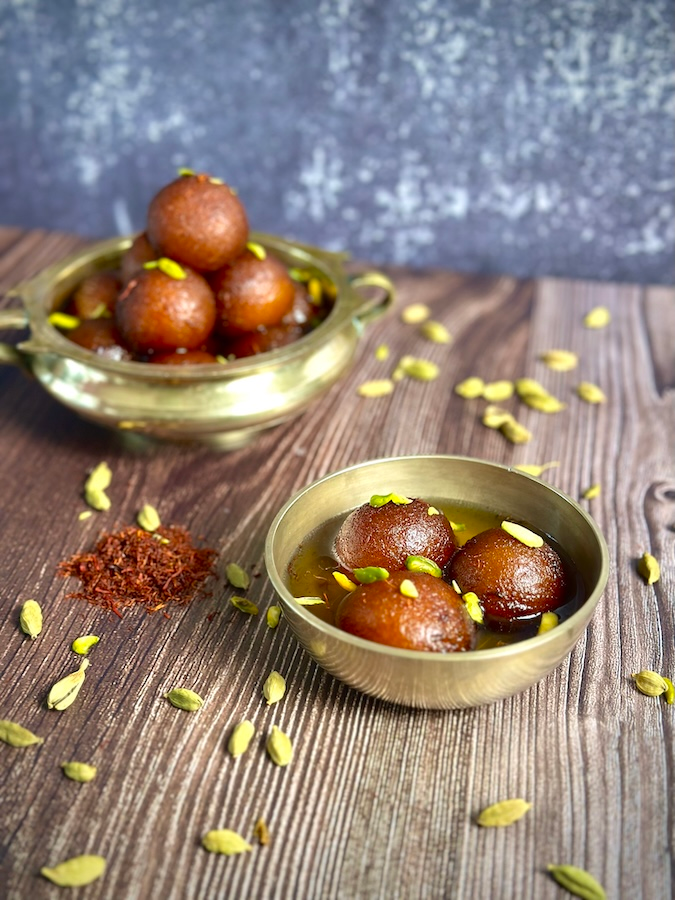
Step into the world of truly authentic Indian sweets with this recipe for Classic Gulab Jamun. These incredibly rich, melt-in-your-mouth sweetmeats are the quintessential dessert, loved across the subcontinent for their comforting flavour and unique texture.
Despite being the most iconic Indian sweet, Gulab Jamun is believed to have roots outside of the subcontinent, likely having been introduced by Persian-speaking rulers . Its name is derived from the Persian words gul (meaning rose, referring to the rose-water often used in the syrup) and jāmun (a small, dark purple Indian fruit it resembles). This rich history speaks to the enduring legacy of this festive and flavourful sweetmeat.
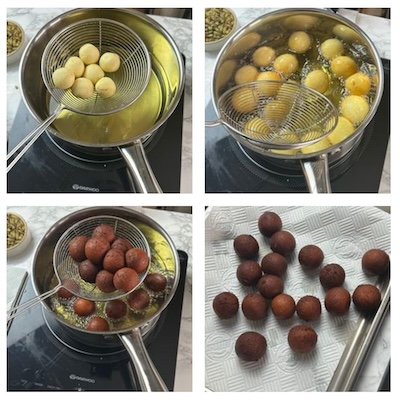
This is not a simplified version; we focus on the traditional method of creating small, perfectly smooth spheres from a dough based on milk solids (often simplified using milk powder and a touch of ghee). The dough is gently deep-fried until it develops a beautiful, uniform, deep brown colour—a crucial step for that characteristic, slightly firm exterior.
The magic happens when the hot, fried spheres are plunged into a warm, intoxicatingly fragrant sugar syrup that has been infused with whole pods of cardamom and a hint of saffron. The Jamun then slowly absorb the syrup, transforming into intensely moist, spongy jewels. When pressed, they should spring back, confirming that perfectly porous interior.
Serve them warm or at room temperature, garnished with slivered pistachios or flaked almonds. This is more than just a dessert; it’s a taste of tradition, perfect for Diwali, Eid, weddings, or any time you crave a luxurious, sweet indulgence.
Ingredients

Dough:
- Whole Milk Powder – This is the essential foundation for the Gulab Jamun. It replaces traditional khoya (milk solids) and provides the rich, deep, milky flavour and dense structure required for a beautifully spongy texture.
- Fine Semolina – A small amount of fine-ground semolina is crucial for texture. It helps the dough remain porous, allowing the hot sugar syrup to be deeply absorbed, resulting in that signature “spongy” chew.
- Plain Flour (9-11% Protein) – Used as a binding agent. This light flour holds the milk powder and semolina together, preventing the dough balls from crumbling when they are fried.
- Bicarbonate of Soda – The key raising agent. When activated by heat and liquid, it creates the small air pockets necessary for the Jamun to swell and become light enough to float and fully absorb the soaking syrup.
- Cardamom Powder – The traditional, aromatic spice. This warm, citrusy note provides a crucial grounding flavour that balances the richness of the milk and complements the exotic fruit flavours.
- Saffron – is a highly prized spice that serves as a hallmark of quality, providing a beautiful golden-yellow colour and a complex, subtly floral aroma to the syrup. Its unique, earthy flavour enhances the cardamom, and it must be bloomed in a little warm milk or water beforehand to ensure it releases its full flavour and colour potential.
- Whole Milk – The liquid binder used to bring the dry ingredients together. Using whole milk ensures the dough has enough fat content to remain smooth and prevents the development of cracks during frying.
- Ghee – Ghee is a purified butter fat with a distinct nutty, fragrant aroma and a high smoke point. For the dough, ghee is crucial as a moisturising agent. When folded in, it ensures the dry ingredients bind into a soft, smooth, and pliable dough, which is the secret to preventing cracks during frying. This results in Jamun that cook evenly and develop a beautiful, uniform deep brown colour.
Syrup:
- Caster Sugar (or Granulated) – This forms the sweet foundation of the syrup. It dissolves quickly when heated with water, creating the thin, sticky liquid that is essential for infusing the fried Jamun with moisture and sweetness.
- Water – Used primarily to dissolve the sugar and control the final consistency of the syrup. The finished syrup must be thin enough to be easily absorbed by the spongy dough balls, preventing them from becoming heavy or dense.
- Cardamon Pods – are the essential aromatic core of a traditional Indian sweet, providing a complex, warm, and citrusy fragrance that balances the richness of the milk dough. For the soaking syrup, gently crushing the whole green pods before adding them ensures they release their fragrant black seeds and volatile oils into the hot liquid. This infusion creates the signature depth of flavour that defines classic Gulab Jamun.
- Saffron
- Passion Fruit Seeds – Added for both visual appeal and a burst of flavour and texture. The small, dark seeds provide a tiny, welcome crunch and release an intense, concentrated hit of passion fruit tang when the sweetmeat is bitten into.
All The Equipment You Need
Storing Gulab Jamun
The syrup’s high sugar content is a natural preservative, meaning Gulab Jamun can be prepared well in advance of serving. For the best flavour and texture, store your cooled Jamun and syrup in an airtight container in the fridge, where they will last for up to one week. Please note that these are not suitable for freezing
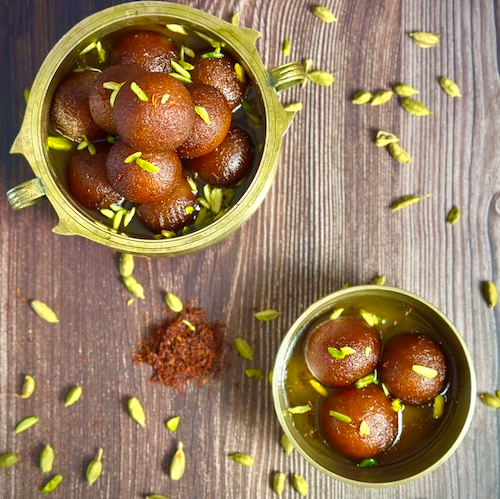
Classic Gulab Jamun
Ingredients
Equipment
Method
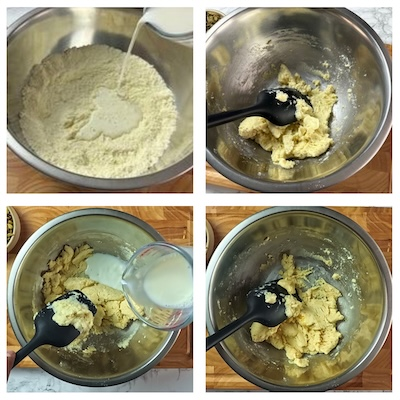
- Into a bowl, whisk together milk powder, semolina, plain flour, bicarb, cardamom powder and saffron.

- Pour in half the milk and mix either by hand or with a spatula until a dough starts to form (it will be dry and crumbly).

- Gradually introduce the remaining milk, adding just a tablespoon at a time. Mix thoroughly after each addition until all the ingredients are fully hydrated and the mixture comes together to form a cohesive, firm dough that remains slightly sticky to the touch.
- Drizzle in the melted ghee and begin to gently knead the dough until a soft, uniform consistency is achieved. Once smooth, cover the bowl and set it aside to rest for 15 minutes.



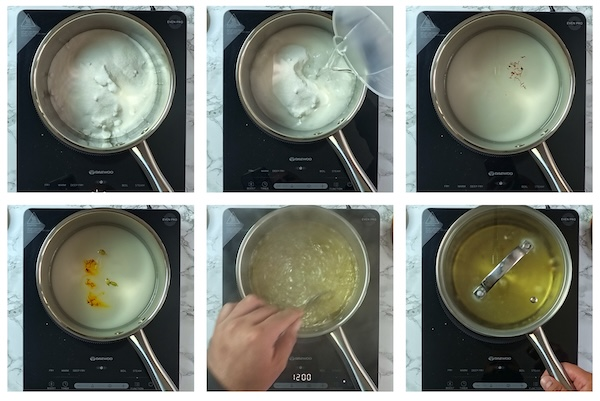
- Into a large saucepan add sugar, water, crushed cardamom and saffron.
- Place over a medium-high heat and bring to a boil. Once it comes to a boil turn down the heat and let it simmer for 2-3 minutes.Turn off the heat and cover with a lid.
- Add oil to a frying pan and place over a medium heat.
- Meanwhile portion the dough into 15g pieces, grease your hands with a little ghee and roll the dough into smooth balls.
- Introduce the dough balls to the 150°C (302°F) oil. They should float after a few seconds. Fry on a low-medium heat, ensuring the Jamun are constantly moving and rotating until they develop a rich, deep brown colour.Do not over crowd the pan, you risk the oil temperature dropping too much and the gulab jamun will take on a lot of oil as it fries.

- Remove and strain on a paper towel and leave to cool for 5-10 minutes. As they cool the shell will harden and crisp up, this is a good indication they have been fried properly.
- Once cooled, add the dough balls to the hot syrup and cover with a lid. Leave to soak for 30 minutes before rotating them. Continue to let them soak for another 1-2 hours before serving.


Notes
- This recipe can easily be halved or doubled, just be precise with the measurements!
- The amount of milk used will vary depending on the brand of milk powder you have, this is why I state to start of with half and gradually add more. Your looking for the correct consistency not to add in all the milk.
- The recipe will not work with skimmed milk powder.
- For best results maintain the oil temp between 150°C (302°F) - 160°C (320°F).
- Garnish with chopped pistachios or almonds, you can also add a little rose water to the syrup is you like. Serve hot or cold, with or without ice cream.